
Blog on Powerful Benefits of Standard Containers, High Cube Containers, Garage Door Containers, Container Homes and Customized Storage Containers
Introduction to Modern Container Solutions
The global demand for standard containers, high cube containers, garage door containers, container homes, and customized storage containers continues to grow as businesses and individuals seek practical, affordable, and flexible solutions. What began as a transportation innovation has evolved into an entire industry serving construction, retail, logistics, agriculture, manufacturing, and residential markets.
Today’s shipping containers offer far more than cargo transportation. They have become secure storage units, mobile offices, workshops, retail spaces, emergency shelters, and even luxurious homes. Their durability, portability, and cost-effectiveness make them one of the most versatile structures available.
Whether you’re looking for additional storage, a container-based business facility, or a modern housing solution, container modifications provide endless possibilities.
Blog for Understanding Standard Shipping Containers
Common Standard Container Sizes
Standard shipping containers remain the foundation of the global container industry. Designed to meet international ISO standards, these units are available in several popular sizes:
| Container Size | Length | Width | Height |
|---|---|---|---|
| 10ft Container | 10 ft | 8 ft | 8’6″ |
| 20ft Container | 20 ft | 8 ft | 8’6″ |
| 40ft Container | 40 ft | 8 ft | 8’6″ |
The 20ft and 40ft containers are the most widely used because they offer excellent storage capacity while remaining easy to transport.
Benefits of Standard Containers
Standard containers offer numerous advantages:
- Weatherproof protection
- Secure storage
- Long service life
- Portable design
- Cost-effective ownership
- Minimal maintenance
Businesses often use these containers for inventory storage, equipment protection, and transportation. Homeowners frequently utilize them for personal storage, workshop space, and seasonal equipment protection.
The robust corten steel construction allows these containers to withstand harsh environmental conditions, including heavy rain, snow, strong winds, and extreme temperatures.
High Cube Containers Explained
Advantages of Additional Height
A high cube container provides all the benefits of a standard shipping container while adding approximately one additional foot of interior height.
Typical dimensions include:
| Container Type | Height |
|---|---|
| Standard Container | 8’6″ |
| High Cube Container | 9’6″ |
This additional height creates significantly more usable volume, making high cube containers highly desirable for many industries.
Benefits Include:
- Greater storage capacity
- Easier loading of tall items
- Improved conversion possibilities
- Better interior workspace
Businesses storing machinery, equipment, retail inventory, or oversized products often prefer high cube containers because of the increased flexibility they provide.
Best Uses for High Cube Containers
Popular applications include:
Industrial Storage
High cube containers easily accommodate:
- Large machinery
- Construction equipment
- Manufacturing supplies
Container Offices
The additional headroom creates a more comfortable interior environment.
Container Homes
Many container home builders choose high cube units because the extra ceiling height improves livability and design flexibility.
Garage Door Containers and Their Growing Popularity
Features of Roller Door Containers
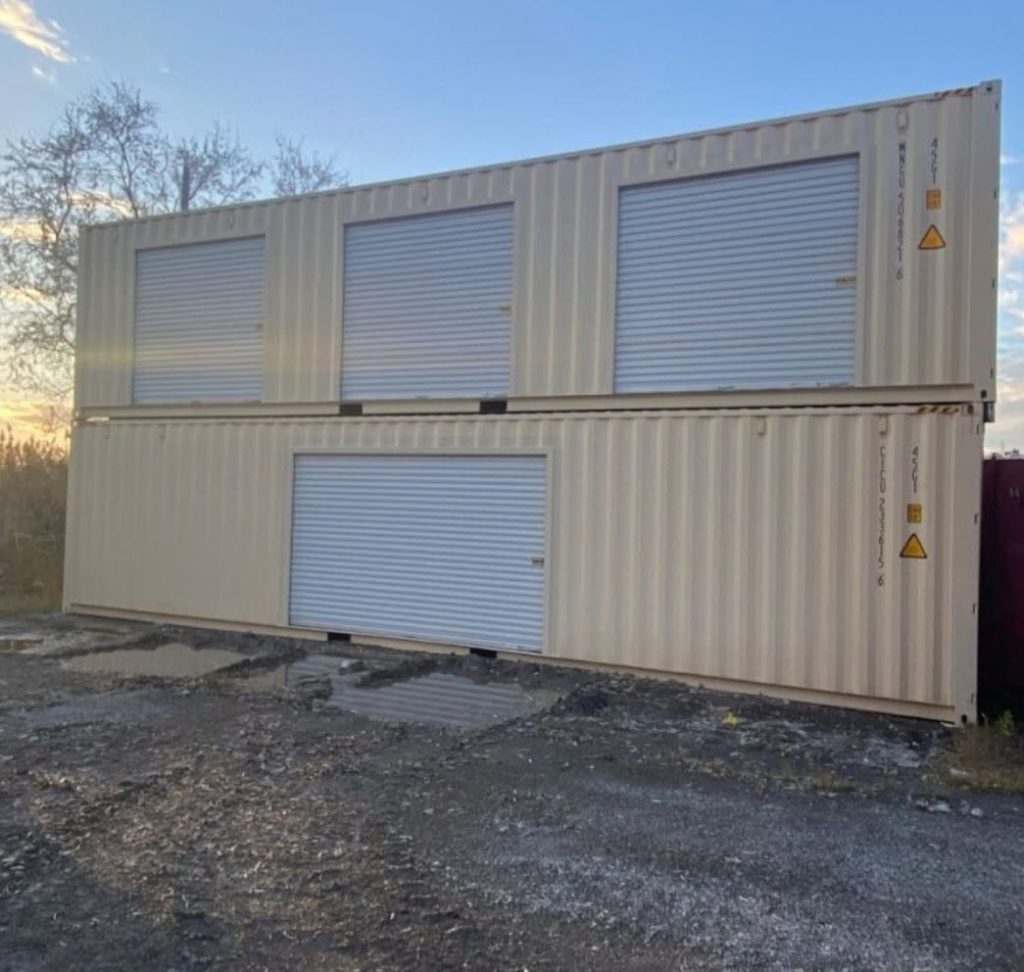
Garage door containers are modified shipping containers equipped with commercial-grade roll-up doors that provide superior access compared to traditional container doors.
Key features include:
- Roll-up access systems
- Heavy-duty locking mechanisms
- Improved loading efficiency
- Enhanced usability
Unlike traditional container doors that swing outward, roller doors maximize available space and improve accessibility.
Commercial Applications
Garage door containers are becoming increasingly popular across multiple industries.
Construction Industry
Contractors use them for:
- Tool storage
- Equipment security
- Site offices
Retail Businesses
Retail operators convert garage door containers into:
- Pop-up stores
- Product display units
- Seasonal sales locations
Warehousing
Warehouse operators often use garage door containers for overflow inventory and quick-access storage.
The convenience of a roller door makes these containers especially valuable in high-traffic environments where frequent access is required.
Container Homes: The Future of Affordable Living
Benefits of Container Home Construction
The popularity of container homes has surged in recent years due to rising housing costs and increasing interest in sustainable construction.
Container homes offer:
- Reduced construction costs
- Faster build times
- Environmental sustainability
- Modern aesthetics
- Flexible floor plans
Because containers are modular, they can be combined to create homes of virtually any size.
Popular Container Home Designs
Some of the most popular configurations include:
Single Container Homes
Ideal for:
- Tiny homes
- Guest houses
- Vacation cabins
Multi-Container Homes
Suitable for:
- Family residences
- Luxury homes
- Commercial accommodations
Hybrid Container Structures
Many builders combine shipping containers with conventional construction methods to create unique architectural designs.
The strength of container construction allows homeowners to enjoy durable, weather-resistant structures that require less maintenance than many traditional building materials.
Customized Storage Containers
Custom Modifications Available
One of the greatest advantages of shipping containers is their adaptability.
Popular modifications include:
- Roll-up garage doors
- Side-opening doors
- Personnel access doors
- Windows
- HVAC systems
- Electrical packages
- Insulation
- Interior finishing
These modifications transform a basic shipping container into a highly specialized solution.
Industry Applications
Customized storage containers serve a wide range of industries.
Construction
Used for:
- Site offices
- Tool storage
- Secure equipment housing
Agriculture
Used for:
- Feed storage
- Equipment storage
- Livestock support facilities
Manufacturing
Used for:
- Inventory management
- Portable workstations
- Equipment protection
Education and Healthcare
Modified containers are increasingly used for:
- Mobile classrooms
- Medical clinics
- Emergency response facilities
The ability to customize containers for specific requirements has made them one of the most versatile structures available today.
Cost Benefits of Container Solutions
One major reason businesses choose container-based solutions is affordability.
Compared to traditional construction, containers offer:
| Feature | Traditional Building | Container Solution |
|---|---|---|
| Initial Cost | Higher | Lower |
| Construction Time | Months | Weeks |
| Mobility | Fixed | Portable |
| Expansion | Complex | Easy |
| Maintenance | Moderate | Low |
These cost savings make containers attractive for both temporary and permanent applications.
Sustainability and Environmental Impact
Container reuse supports sustainable building practices by extending the useful life of existing structures.
Environmental benefits include:
- Reduced construction waste
- Lower material consumption
- Recycling of steel structures
- Reduced carbon footprint
Many businesses now incorporate container solutions into their sustainability initiatives.
For international container standards, visit the official International Organization for Standardization (ISO).
Buying Guide and Selection Tips
Before purchasing a container, consider:
Intended Use
Determine whether you need:
- Storage
- Office space
- Housing
- Retail space
Container Condition
Options include:
- New (One-Trip)
- Cargo Worthy
- Wind & Watertight
- As-Is
Required Modifications
Consider:
- Insulation
- Electrical systems
- Doors
- Ventilation
- Security upgrades
Selecting the correct container configuration ensures maximum value and long-term satisfaction.
Frequently Asked Questions
1. What is the difference between a standard container and a high cube container?
A high cube container is approximately one foot taller than a standard container, providing additional storage volume and improved interior space.
2. Are garage door containers secure?
Yes. Garage door containers feature heavy-duty steel construction and secure locking systems designed to protect valuable assets.
3. Can shipping containers be converted into homes?
Absolutely. Container homes are widely used for residential, commercial, and vacation properties.
4. How long do shipping containers last?
With proper maintenance, shipping containers can remain functional for 25 years or more.
5. What modifications are available for customized storage containers?
Common modifications include roll-up doors, insulation, windows, electrical systems, HVAC units, shelving, and interior finishing.
6. Are container homes environmentally friendly?
Yes. Repurposing shipping containers reduces waste and minimizes the need for new construction materials.
Conclusion
The growing popularity of standard containers, high cube containers, garage door containers, container homes, and customized storage containers demonstrates their remarkable versatility and value. From secure storage and portable workspaces to innovative housing and commercial facilities, container solutions provide practical answers to modern challenges.
As businesses and homeowners continue seeking flexible, durable, and cost-effective alternatives to traditional construction, container-based structures remain one of the smartest investments available. Whether you’re expanding storage capacity, launching a business, or building a unique home, today’s container solutions offer unmatched opportunities for growth, efficiency, and long-term success.